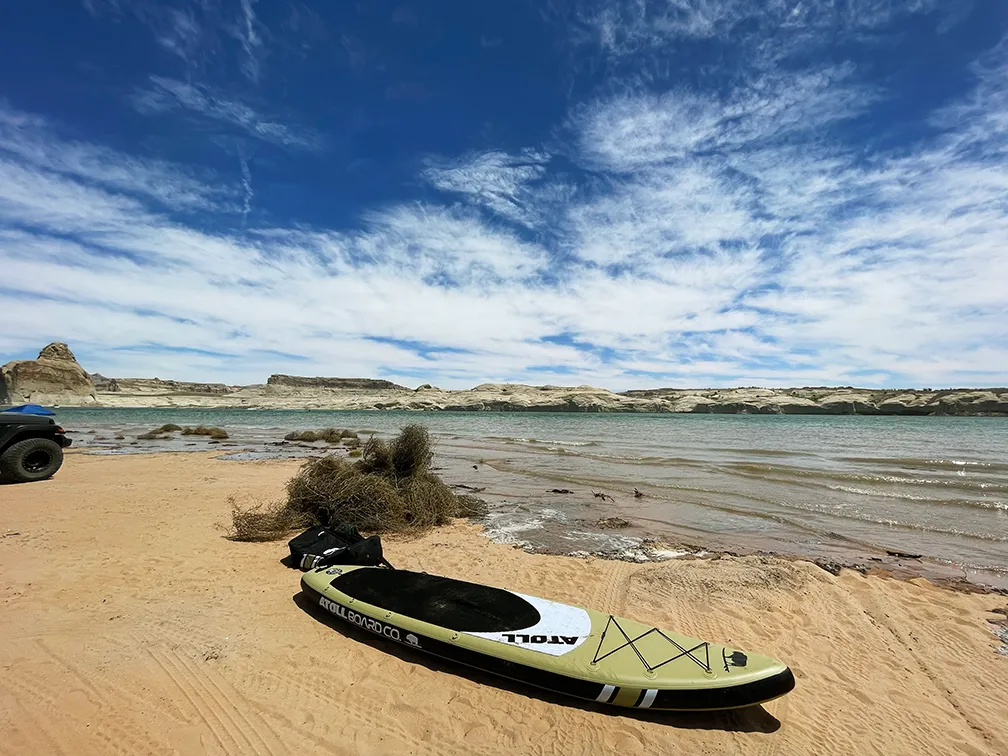
Lake Powell is a large reservoir on the Colorado River in Glen Canyon National Recreation Area, spanning southern Utah and northern Arizona, at 1,101 metres. It is a flooded canyon system rather than an open basin, which gives it an enormous and highly irregular shoreline.
What drives the score here
Powell is a heat and wind location rather than a cold-water one. The desert setting pushes summer heat and UV up the list of things capping the score, and the reservoir is large enough that wind has substantial open water to work across. Its canyon geometry cuts both ways, and this is the spot where a single forecast point is least representative of the whole: some side arms are deeply sheltered while the main channel is fully exposed, and the score cannot distinguish between them. Read it as a regional indication, not a local one.
What the Paddle Score measures
A single number from 1 (Danger) to 5 (Excellent), built from wind speed and gusts, air and water temperature, UV index, cloud cover, precipitation and visibility — then constrained by fixed safety rules the model is not allowed to override. Wind above 25 mph costs two full points. Water below 5°C is penalised hard regardless of how good the day looks.
What the score can’t see
Powell has seen dramatic water-level changes in recent years, and launch ramp availability has changed with them. That is reservoir operations, not weather — check current National Park Service status rather than inferring anything from a good score.
Wear a life jacket, every time. The Paddle Score is a decision aid, not clearance to go out. It cannot account for your skill, your equipment, currents, traffic, or hazards at your launch site.